
Film and Lecture Collection
Peter Ammann Collection
ISAPZURICH is proud to house the Peter Ammann Collection — a rare archive of films and lectures at the intersection of Analytical Psychology, African healing traditions, and documentary filmmaking.
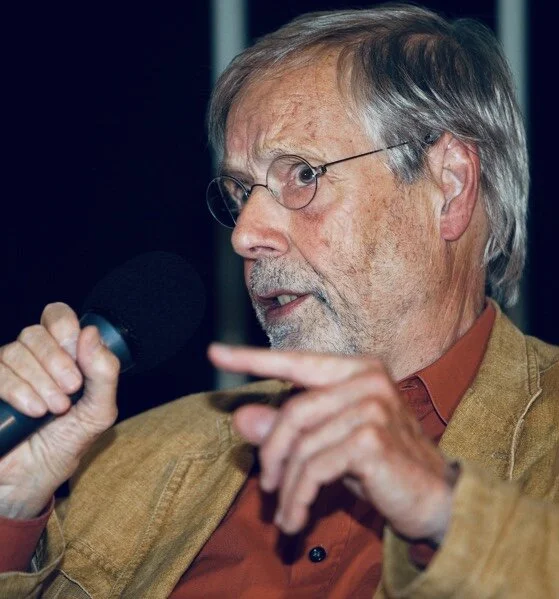
Introduction – Deborah Egger
ISAPZURICH is thrilled to be the home of the Peter Ammann Collection. The films and lectures that comprise this collection are unique contributions to the field of Analytical Psychology. Included are topics coming from Peter’s vast experience and deep interest in Africa, the Bushpeople (San), their myths and healing rituals and their rock paintings. Also documented is his pioneering initiative for dialogue between South African Jungian Analysts and African Traditional Health Practitioners, a new opportunity for cooperation and enlightenment “in how humans have experienced their psychic life across cultures since immemorial times.”
His early musical training shifted Peter’s interest into the art of filmmaking under the influence of Federico Fellini, documented here. In addition, as a young man, Peter visited the 80-year-old CG Jung and revisits this event in his CG Jung 60th Memorial Lecture, which is also included in this collection.
To be also found in this rich archive, is an interview with Marie-Louise von Franz, Dora M. Kalff explaining her sandplay therapy, Laurens van der Post lectures and an interview with Dr. Vera Bührmann, the first Jungian Analyst in South Africa.
Peter Ammann’s legacy pays tribute to a lifelong work of passion and meaning and this collection demonstrates a living relationship, an inner dialogue, between ego and the unconscious, personal and collective, which is at the center of what we do here in the training at ISAP. This is a fitting place for this Collection.
Biography – Peter Ammann
Peter Ammann is a founding member of the International School of Analytical Psychology Zurich (ISAPZURICH), where he is also a lecturer, training analyst and supervisor.
After initially training as a cellist in Zürich and Paris, his other interests prevailed and after a crucial visit to C.G. Jung, he began studying Jungian psychology. Among his training analysts were Jolande Jacobi and Marie-Louise von Franz. In 1965, he graduated from the C.G. Jung-Institute Zurich and simultaneously earned a doctorate at the University of Zürich in musicology, history of religion, and ethnology.
Filmmaking
Motivated by his passion for filmmaking, Peter Ammann went to Rome to apprentice with Federico Fellini during the production of Satyricon. Since 1970, he has worked as an independent filmmaker and collaborated with Swiss Television in Geneva. Two of his documentaries focus on immigration: Workers yes, Humans no(with René Burri), exploring the heated debate about Switzerland’s first referendum on “foreign infiltration,” and The Red Train, which follows Italian workers returning home to vote. The film contrasts their exclusion and hardship with the myth of William Tell, a Swiss archetype of liberation from tyranny—now a folkloric figure for many Swiss, but a symbol of hope for freedom from unbearable conditions for Italian emigrants.
In 1984, an encounter with Laurens van der Post sparked his enduring interest in Africa. In 1990, he was invited by Vera Bührmann to give seminars and lectures at "The Cape of Good Hope Centre for Jungian Studies." Since then, he has regularly lectured in South Africa and internationally, while directing several documentaries in Southern Africa that consistently integrate a Jungian perspective into his cinematic work.
Jungian Analysts and Traditional Healers
For many years, Peter Ammann has been dedicated to fostering dialogue between Jungian analysts and traditional healers in South Africa. Together with Nomfundo Mlisa — a registered psychologist, academic, and trained African Traditional Healer — and Renee Ramsden and other Jungian analysts from SAAJA, he helped establish a dialogue group between Jungian analysis and traditional African healing practices in 2016. This group remains active today, and its groundbreaking work was presented at the 2019 IAAP Congress in Vienna, as documented in a film by Peter Ammann.
Documentary Films
Spirit of the Rocks
(2002) What is it about the Bushpeople (San) that touches something deep in us? Setting off to South Africa, Botswana and Namibia, we discover, through their extraordinary rock paintings, the world of our ancestors, the hunters and gatherers. The Bushpeople, still alive today, share with us their myths and healing dance, restoring our links with a way of life we have lost. (80 Min.)
Mabi's Feast Sangomas Celebrating San
Mabi, a traditional Zulu healer, had a special connection with the Bushpeople (San). They belonged to his ancestors who appeared in his dreams, teaching him everything about healing. During the filming of Spirits of the Rocks in 2001, Mabi met the San for the first time in reality. Through a special ceremony, he honored these people held in contempt for so long.
Hlonipa – Journey Into Wilderness
(With Ian Player – Introduced by Laurens van der Post)
In the heart of Zululand's Umfolozi Game Reserve, a group of travelers embarks on a wilderness trail led by conservationist Ian Player. Beyond the encounter with wildlife and a magnificent countryside, the participants start to recount their dreams and the fruits of their meditations. From an outer adventure, the wilderness trail turns into an inner experience.
Sandplay with Dora M. Kalff
This film, made in 1972, by now considered a classic, is the only documentary in which Dora Kalff shows and explains her method of therapy developed in the late 1950’s, based on the psychological principles of C.G. Jung and the World Technique method of Margaret Lowenfeld. It can be used therapeutically as well as diagnostically, with both adults and children.
Marie-Louise von Franz – a Film by Françoise Selhofer
Marie-Louise von Franz, in this film made in 1982, gives insight into her encounter and collaboration with C.G. Jung and the development of her own work. She answers questions about the interpretation of dreams, creativity, synchronicity, alchemy, and the great oppressive problems of our time. Duration: 41 min. / Language: Deutsch / Subtitles: English / Voiceover: French, Italian, Spanish.
The Red Train and the Myth of William Tell
The Red Train and the Myth of William Tell is a visually striking, politically and psychologically resonant documentary that transforms a seemingly simple account of Italian migrant workers traveling from Switzerland to vote in Italy into a powerful reflection on democracy and belonging. Through a bold musical collage of voices, landscapes, and various William Tell performances, the film subtly exposes the contradictions beneath Switzerland’s national myth.
"Braccia sì—uomini no" (Arms yes – Humans no)
“Braccia sì—uomini no” (Arms yes—Humans no) is a documentary about the Swiss debate surrounding James Schwarzenbach’s 1970 initiative against “foreign infiltration,” produced before the vote of June 7, when the Swiss across the country engaged in heated discussions about foreign workers and “over-alienation.” This award-winning film bears witness to the beginning of an ongoing debate about the so-called Überfremdung, not only in Switzerland, but also in various forms as a worldwide ethnological phenomenon of social and cultural conflict. (English subtitles)
Lectures & IAAP 2025 Address
IAAP 2025 Address
Peter's address to the IAAP Congress 2025 in Zurich.
Mantis Creates the Eland and the Moon
This Bushpeople story tells how their deity Mantis creates the eland antelope, vital for satisfying the instinct of hunger. Cast out by his family, Mantis falls into anger and melancholy. At a turning point, he is drawn to create the Moon, bringing light to darkness, consciousness to the unconscious. Its reflected light becomes an expression of what Jung considers "the instinct of reflection," that is "the cultural instinct par excellence."
Music & Melancholy
This lecture discusses Marsilio Ficino's Renaissance view on melancholy and his most recommended remedy: music. His intention is to temper the melancholic influence of the male deity Saturn through astrological songs addressed to the benign female planets: Sun, Jupiter, and Venus. His approach is related to Jung’s rehabilitation of the feeling function, and its relevance for us today highlighted.
Jung and Africa
This lecture explores Carl Jung's journey to Kenya and Uganda in 1925–26, placing it in a historical context and showing how his African experience was rooted in his earlier dreams and active imaginations. It testifies how Jung, the “White Man,” as a participant observer, allowed himself to be deeply affected and even transformed by encountering the “Indigenous Man” and his culture.
Rock Art & the Origin of Consciousness
How Rock Paintings Reflect the Emergence of Humans as a Symbolic Species.
Rock art is the most important testimony of primal human imagination. Following Jung's hypothesis of the "reflective instinct," his concept of "the symbolic attitude," and African and Australian myths, this lecture explores how rock paintings reveal the emergence of humankind as a species that seeks consciousness through symbol-making and, as such, becomes what Jung calls "the second creator of the world."
Listening to the Unconscious – Listening to the Ancestors
About the Archetypal Roots of Jungian Psychology
Why can Jungian psychology be considered the closest one to African psychology? This lecture deals with the primordial indigenous roots of C.G. Jung's Analytical Psychology, particularly their African ones. It explores its connections with African Traditional Healing, highlighting that Jung's concepts are not theoretical constructs but grounded in how humans have experienced their psychic life across cultures since immemorial times.
Federico Fellini
The Role of Dreams in an Artist's Crisis of his Creative Power
From Personal Story to Mythical Event
When artists have a creative crisis, do they listen to their dreams? The famous Italian film director Federico Fellini, a great admirer of Jung, certainly did, especially during a creative crisis around 1966 while planning The Journey of Mastorna, which he had to abandon. His dreams guided him away from personal narratives toward more archetypal themes, resulting in his celebrated "Satyricon”.
What My Power Figures Tell Me
A Journey through the Darkness of the Heart to the Mirror of the Belly
This 90th Birthday Lecture explores African power figures, connecting them with their political and cultural origins. It examines them as evidence of resistance against the appalling events of colonization. Additionally, it bridges the Jungian concept of intuition with the African notion of umbilini, which can be framed in the context of scientific brain research as the gut-brain, our second brain, responsible for gut decisions.
A Visit to Jung – Revisited
C.G. Jung 60th Memorial Lecture
This lecture recounts my 1956 visit with the 80-year-old C.G. Jung. It shares our conversations on many topics, including dreams and music. I realize that Jung is anything but a petrified monument; on the contrary he is very human, not pretending to know everything, and at times vulnerable and embittered by not being taken seriously. My visit ends with a surprising twist…
Encountering the Other
Jungian Analysts and African Traditional Healers in Dialog
At the XXI International Congress for Analytical Psychology (IAAP) 2019 in Vienna, Peter Ammann, Fred Borchardt, Nomfundo Mlisa, and Renee Ramsden presented the work of the dialogue group between South African Jungian Analysts and Traditional Health Practitioners. This group was founded with the aim of establishing an ongoing encounter between these two ways of healing.
Signposts of My Days – Stars of My Nights
85th Birthday Lecture
We need role models, especially when we are young, who, like signposts or lighthouses, enlighten our way and give us direction to follow. My personal homage to people whose imagination, intuition, spirituality, art, and courage have inspired me and many others: Jung, Churchill, Pablo Casals, Marie-Louise von Franz, Fellini, Vera Bührmann, Laurens van der Post, Nomfundo Mlisa...
Laurens van der Post – The Bushmen and their Stories
Lecture 1
Laurens van der Post’s journey in search of the Bushpeople (San) formed the basis of his famous books The Lost World of the Kalahari and The Heart of the Hunter. In 1986, he gave three lectures at the C.G. Jung-Institute Zürich about his experiences with the Bushpeople, during which he interpreted many of their stories in his own inimitable way.
Lectures 2 & 3 – The Bushmen and their Stories
-
Vimeo
Lecture 2
Laurens van der Post · 2010
-
Vimeo
Lecture 3
Laurens van der Post · 2010
Healing in Two Worlds
Jungian Analysts Encounter African Traditional Healers
At the XVII International Congress for Analytical Psychology (IAAP) 2007 in Cape Town, Jungian analysts and traditional healers explored the intersection of the African traditional belief system and Jungian Psychology during three workshops. They raised questions about similarities and differences, the role of ancestors, and the potential for ongoing dialogue between African healers and depth psychologists. These matters provoked vigorous debate.
Living in Two Worlds
Communication Between a White Healer and Her Black Counterparts
Vera Bührmann Interviewed by Mario Schiess.
Dr. Vera Bührmann, the first Jungian analyst in South Africa, explored African traditional healing practices, comparing them and framing them within the language of Analytical Psychology. Her book Living in Two Worlds remains a foundational text for understanding traditional healing from a Western clinical perspective. Mario Schiess interviewed Bührmann in 1992 about her work in this area.