
Full Training
Full-time International Training Program
Becoming an Jungian analyst.

- Duration
- Minimum 4 years, individually paced; average completion is 7 years
- Format
- First part of training (Training Candidacy) in-person in Zurich; second part depending on pathway: Full-Resident or Part-Resident
- Language
- English
- Credential
- Diploma in Analytical Psychology
Overview
Overview
Jungian analysis has been proven effective in treating psychic disturbances, life crises as well as helping those seeking a deeper meaning in life. The focus lies in the process of individuation – fulfilling the uniqueness of one’s personality – so that psyche and lived life come into harmony.
The students at ISAPZURICH become skilled in the classical concepts and attitudes of C.G. Jung, including:
- Access to the unconscious and its potential for transformation
- The understanding of complexes, archetypes and symbols appearing in dreams, fairy tales, myths and imagination.
- Further fields of knowledge investigating psychic life, such as the Word Association Experiment, typology, sand play, alchemy, philosophy, ethnology and religion.
- The relevance of neuroscience, working with trauma, psychoanalysis, developmental psychology, imagination, dream analysis, bodywork and psychiatry to individuation.
An essential part of the program is personal and requires experience of the unconscious in a training analysis and the development the personality through the individuation process. This aspect of the training is invaluable for the analytic profession as well as for all of life.
The training program takes place in Zurich where Jung lived and his work evolved. Students may visit the Psychology Club, the archives of the ETH, ”Burghölzli”, his house in Küsnacht, the tower in Bollingen, and other places where his spirit can be felt and experienced.
International Program
The completion of the International Training program at ISAP results in a diploma in Analytical Psychology, which is recognized by the International Association of Analytical Psychology (IAAP). The IAAP is the international umbrella organization of Jungian Analysts. ISAP is the training institute of the Zurich-domiciled, International Association of Graduates in Analytical Psychology (AGAP), which is a co-founding group member of the IAAP with training privileges.
ISAPZURICH students may choose from a large number of experienced and internationally well-known training analysts, all steeped and trained in the Zurich-immersion tradition. Courses are offered in English and German, and training analysis and supervision are offered in many other languages as well. Students and training analysts come from over 20 foreign countries and from a wide variety of backgrounds. This contributes to a unique and culturally rich experience, only available at ISAP.
ISAPZURICH offers two variations of International Training, Full Residence, in which all aspects of training are completed in Zurich, and Part Residence, in which the first half of the program is completed in Zurich and the second half at home with only partial presence in Zurich. For more details on the International Training program please click here.
Structure
The Course of Training
- Admission Interviews
- Suitable candidates are invited to interviews with the Admissions Committee. Applicants meet twice with each of three members of the admissions panel. (6 interviews in total). The Admissions Committee meets to review all the applicant's information. Applicants are advised of the committee's decision shortly after this meeting.
- Personal Analysis - 300 hours
- Personal analysis is a required, ongoing part of training at ISAPZURICH — not just a milestone to complete, but a continuous practice throughout both stages of training. Candidates work regularly with an experienced training analyst to engage directly with their own unconscious material, as a foundation for the clinical work they'll later do with clients. Minimum hour requirements build progressively: 150 hours are required for stage one. Personal analysis continues into stage 2: Diploma Candidacy, supporting candidates as they take on supervised clinical work with real clients.
- Stage one: Training Candidate
- The first stage of training is called Training Candidacy — this is when students are known as training candidates. It typically spans the first four semesters and combines experiential seminars, academic coursework, and personal analysis with a training analyst. During this stage, candidates work toward key milestones, including: An accepted first Symbol Paper A minimum of 120–150 hours of personal analysis A one-month, full-time clinical internship Completion of at least three semesters of coursework This stage concludes with the Propaedeuticum Exams. Passing these exams marks the transition from Training Candidate to Diploma Candidate — the point at which the focus shifts from foundational learning to supervised clinical work with clients.
- Course Attendance - 400 hours
- Candidates are required to attend 200 double hours of courses (lectures, seminars, etc) by the end of their studies.
- Propaedeuticum examinations
- 8 propaedeuticum exams take place over one or two semesters (personal choice).
- Clinical Internship - 3 months
- Candidates who have not had prior experience of clinical work are required to complete a full time clinical intrenship of at least 3 months. This is typically split into one month during stage one of training and two further months during stage two.
- Stage two: Diploma Candidate
- Passing the Propaedeuticum Exams marks entry into the second stage of training — Diploma Candidacy. The focus now shifts from foundational learning to practice: diploma candidates begin working directly with clients, under the close supervision of experienced training analysts. This stage builds on the groundwork laid in Training Candidacy, combining: Supervised clinical casework with real clients Continued personal analysis Advanced seminars and case colloquia (open only to diploma candidates) Preparation for the remaining written and oral exams The stage — and the full training program — concludes with the Diploma Exams and Thesis Discussion. Successful completion results in a diploma in Analytical Psychology and the professional path toward becoming a Jungian Analyst.
- Case Work - 300 hours
- Diploma Candidates must complete 300 hours of case work with clients, under the auspices of ISAP. All case work is supervised by Supervising Analyst from ISAP.
- Individual Supervision - 80 hours
- Every diploma candidate's clinical casework is supervised by an experienced analyst.
- Group Supervision - 60 sessions
- Diploma Candidates must attend 60 sessions of group supervision.
- Diploma Examinations
- Stage two: The 6 diploma exams take place over two semesters.
- Thesis
- Diploma candidates write a major research paper. The thesis demonstrates two things: the candidate's ability to carry out original academic work, and their ability to draw on and reflect critically on their own personal experience in relation to the topic. This dual demand — scholarly rigor with genuine self-reflection — mirrors the wider spirit of ISAP's training: theory and lived experience developed together, not in isolation. The thesis is presented and discussed as part of the Diploma Exams & Thesis Discussion, the final milestone marking the completion of training.
-
1
Masters degree in any field
A Master's degree or its equivalent in any field. Candidates from other backgrounds are considered on their merits.
-
2
Prior personal analysis
50 hours of personal Jungian analysis undertaken before application, demonstrating familiarity with the analytic process from within.
-
3
Professional and personal maturity
Evidence of the personal stability and life experience appropriate to the responsibilities of clinical analytic work.
-
4
Command of German or English
Sufficient fluency in at least one language of instruction to follow seminars and undertake supervised work.
-
5
Minimum age of 26 years
The application process. Submit the application form. Your named referees will be sent reference forms for completion. Once they have been received we will be in touch to progress your application.
You can find the Study Regulations and a summary graphic of the Full-time Program here.
Fees
Tuition & Costs
| Application for Studies | CHF 300 (one off fee) |
|---|---|
| Application Interviews with Admissions Committee | CHF 150 (per interview); in total CHF 900 |
| Training Candidate | CHF 3,200 per semester |
| Propaedeuticum Exams | CHF 1,400 |
| Promotion Interviews with Admissions Committee | CHF 150 per interview; in total CHF 450 |
| Diploma Candidate | CHF 3000 per semester |
| Final Interviews with Admissions Committe | CHF 150 per interview; in total CHF 450 |
| Diploma Exams & Thesis Discussion | CHF 3,000 |
| Personal Analysis (300 hours minimum requirement by end of studies) | approx. CHF 130.- per hour; in total approx. CHF 39,000 |
| Diploma candidate individual supervision of case work (80 sessions required). | approx CHF 130.- per session; in total approx CHF 10,400 |
| Diploma candidate group supervision of case work (60 sessions required) | approx. CHF 30.- per session; in total approx CHF 1,800 |
| Postponed Start of Studies | CHF 150 |
| Exam Postponement | CHF 150 per exam |
| Repeated Case Exam | CHF 550 |
| All Other Repeated Exams | CHF 200 per exam |
Tuition fees include membership dues of CHF 25.- for the Student Association.
Coordinator
Program Coordinator
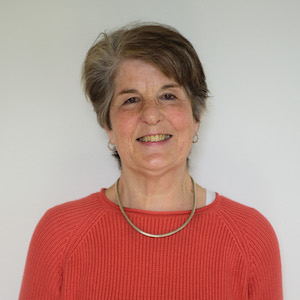
Lucienne Marguerat
Director of Admissions
From the Catalogue
Seminars from the Catalogue
-
08SepDetailsPublic 13:00–14:45
Losing Touch and Gaining Infinite Connection: A Humanist Dreamer at Home and Adrift in a Quantum/Post-Quantum World
Lecture · ISAP Zürich / Zoom
Lecturer: Josephine Evetts-Secker · Course no. 01 02
-
08SepDetailsPublic 15:00–16:45
Ecological Issues Unveil the Unlived Soul Life of our Time
Lecture · ISAP Zürich / Zoom
Lecturer: Brigitte Egger · Course no. 01 03
Begin Your Application